Be yourself; Everyone else is already taken.
— Oscar Wilde.
This is the first post on my new blog. I’m just getting this new blog going, so stay tuned for more. Subscribe below to get notified when I post new updates.
This blog is about the benefits, challenges and joys of parenting using nature immersion, adventure through backpacking, and traveling with children.
Be yourself; Everyone else is already taken.
— Oscar Wilde.
This is the first post on my new blog. I’m just getting this new blog going, so stay tuned for more. Subscribe below to get notified when I post new updates.
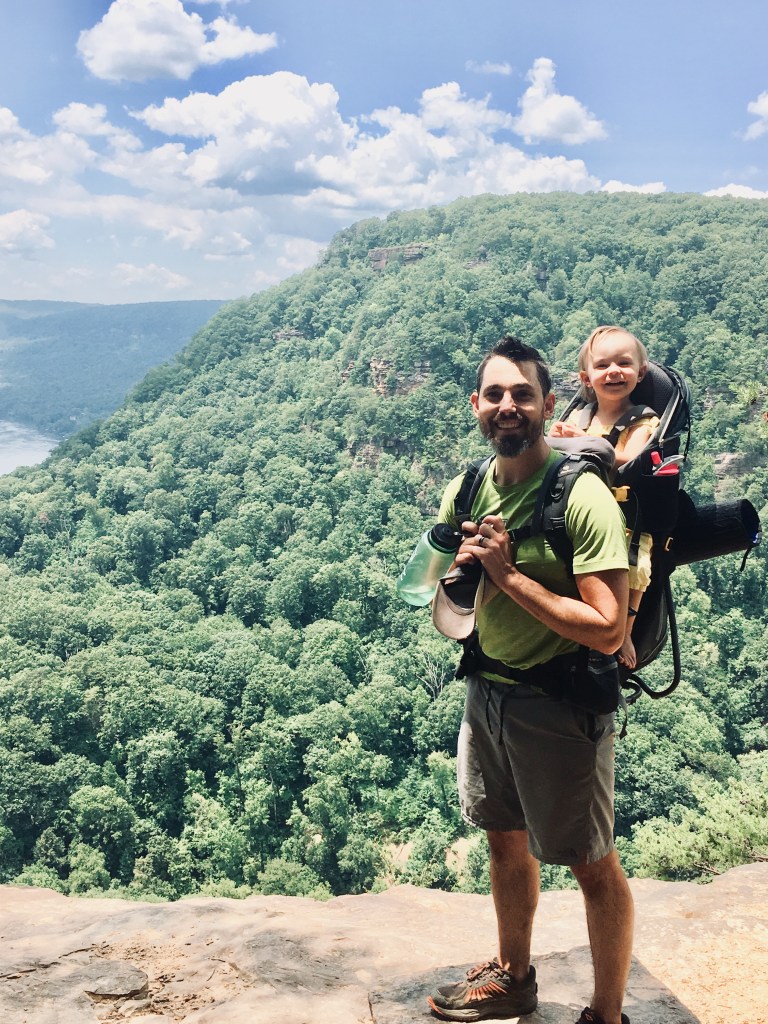
All through my 20’s I backpacked through different wildernesses in the desert southwest, primarily in Arizona. I’d go with friends, I’d go alone, at the first opportunity, say a three day weekend, or spring break, or the entire summer! And after a while, after all the miles and experiences, having endured storms or struggled to find sources of water in a particularly arid stretch of mountains, I felt like I knew what I doing. I knew how to pack, what the right gear was for different terrain, when to leave or take a tent, if I needed to bother bringing spare clothes, if cheese would make it, etc. I felt confident, almost over-confident.
And then one day I had children and everything I thought I knew about backpacking, including what a difficult hike was or is, kind of went out the window.
Backpacking with children is entirely different. I’d say that if you haven’t done it, you don’t truly know what a challenge in the outdoors is. It is sooo easy looking back at even my most difficult backpacking trip and laughing at my struggles, because, to be honest, when all you have to take care of is yourself, then the going is not that tough.
I think of our primordial parents, raising human beings in caves, having to migrate hundreds of miles with toddlers and infants, keeping them from wild animals and cliffs and flash floods and ticks. How improbably is it that we have survived this long given the delicate state and requirements for a human infant to survive?
One of the obvious differences ins’t necessarily the amount of weight you are carrying when backpacking with a toddler. You can discard heavy amenities and excesses that tend to find the backpack when going it alone to balance the difference (unless it’s an overnighter!). The difference on a day trip is that the weight of a toddler is living and moving, with wants and needs. My toddler bounces in the pack when excited, even yelling “giddy-up!” when excited as if I’m her personal horse, which I sort of am.
That brings me to another difference: Backpacking with friends or solo is mostly about you. Backpacking with a toddler is mostly about them. If they want to get out and stop, you’ll probably have to stop, even if the spot your currently at isn’t ideal. Sometimes you have a sight you really want to see, and the hike is four miles in and four miles out. If your toddler isn’t willing to play along for the ride, you might have to let that goal go for the sake of keeping the adventure fun and light and focussed on the toddler, rather than yourself. It’s almost an act of practicing Buddhism, taking the circumstance as it comes and accepting it in all its forms.

What I can say is that practice makes perfect. Start small, and consistently go out with your child. Over the course of a year they will develop a routine and comfort out of the discomfort and adventure that comes with backpacking. My daughter has learned that I usually have a cool destination in mind, and that I bring lots of delicious snacks, and that when we get there I’ll put the hammock up and we can eat. She loves eating in the hammock.
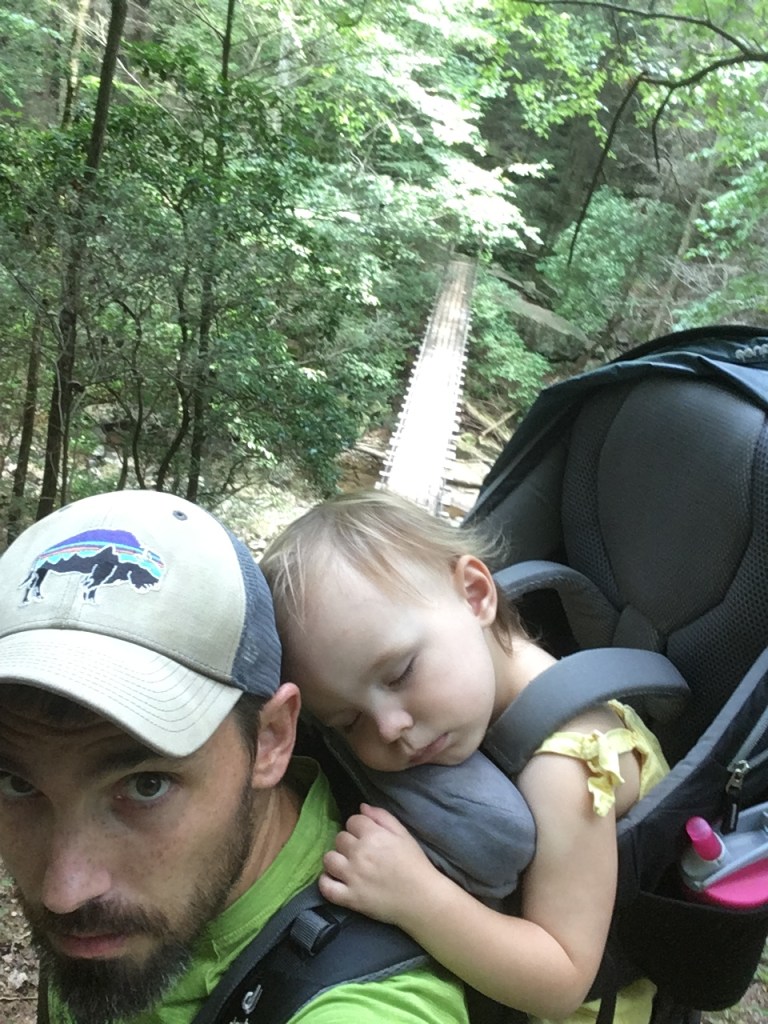
Over time my daughter got to the point where she would even sleep for a two or three miles, or about an hour in the pack, so that I could plan my trip around her napping while I hiked. This was best if I really wanted to push the mileage on a particular day. Ultimately, I find the difficulties worth it. My daughter has become my favorite backpacking partner, always down to go six or seven miles, especially if I choose a spot with water. But this all started by taking her to local parks and hiking less than a mile. So start slow, and grow from there. It’s totally worth it.

Sometimes a trip to a park or trail system isn’t convenient. Maybe my toddler has a cold, or we have a doctors appointment at an inconvenient time that might interrupt the nap schedule. Or maybe I just want to knock out some household chores.
One simple outdoor activity I like to do on home days like this is an insect hunt.
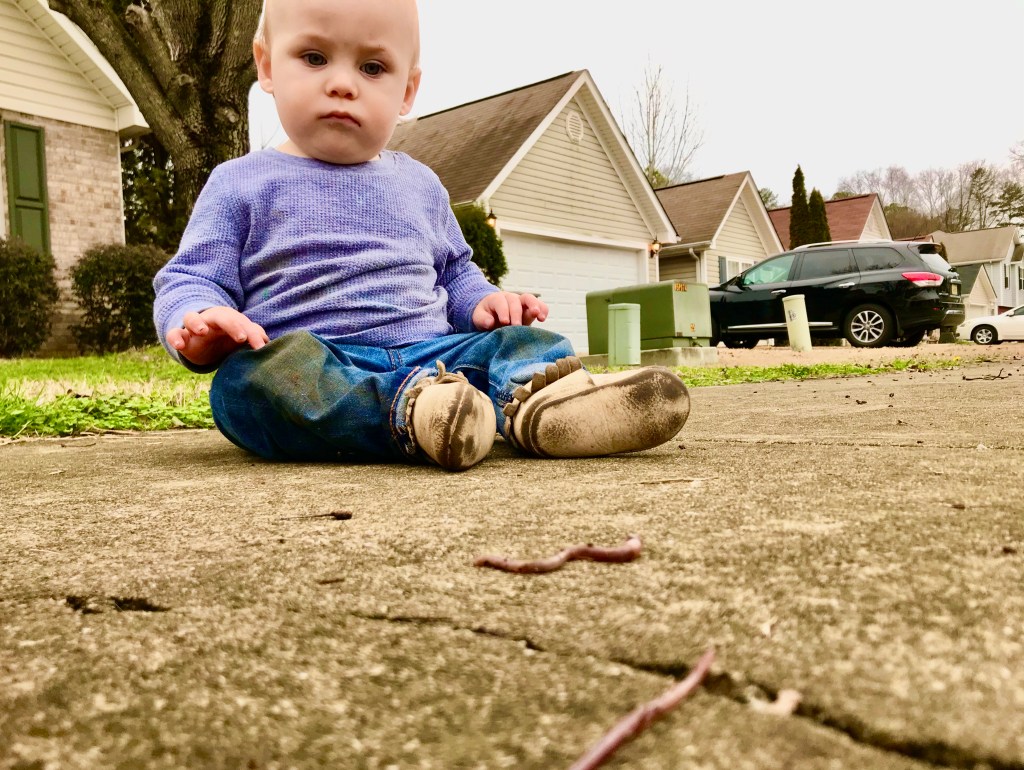
Pictured above is my son Indie making observations about the worms on the pavement. Why are they squirming? What are they? “That?” he says, pointing. “Worms,” I respond. “Those are worms!”
This natural interaction presents the children with situations where their natural curiosity will lead them to learn about the world around them. It also acts as a language activity in that they need to know that the long, slimy, wriggling brown thing on the ground is a worm. Or that a worm is a long, slimy, wriggling brown thing…you get it.
A good place to look is under rocks. I also have a bucket, a shovel and small hand rake so that Isla and Indie can dig in the dirt to find worms, learning in the course of digging that worms live in the ground, and that on cold days they are much harder to find. Additionally, it helps them use both fine and gross motor skills.
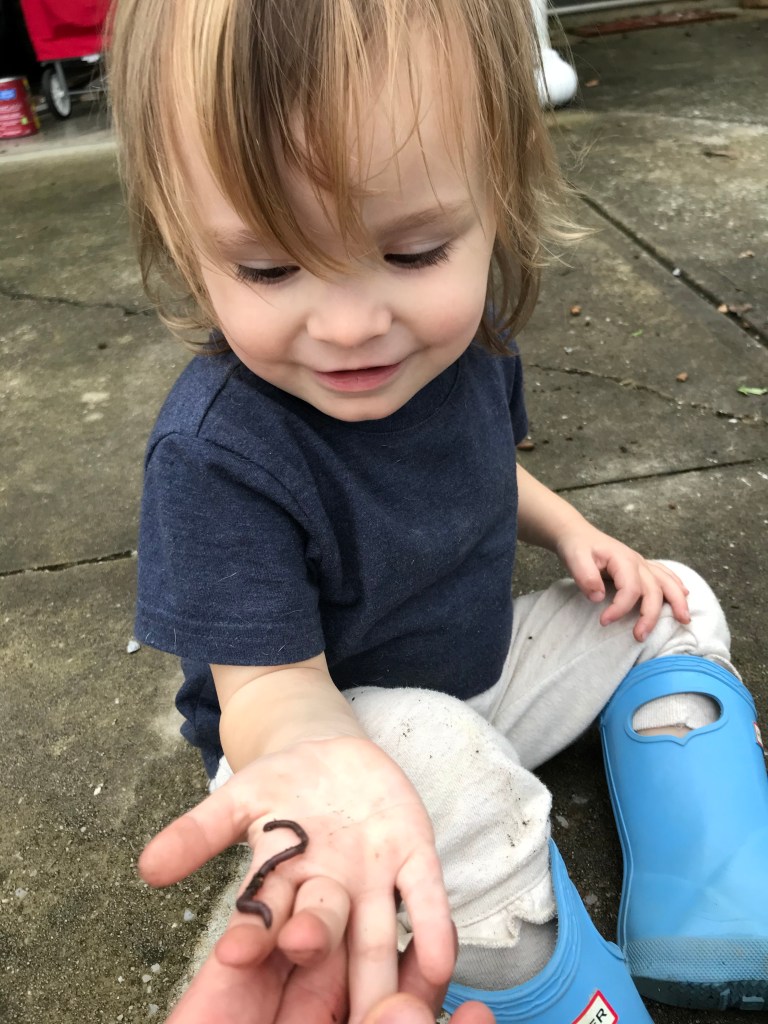
You’ll find that when the children hold the worms, or slugs, or snails, etc., little windows into their personalities appear. How do they respond to the insect? Are they afraid? Do they know to be gentle or will they learn that rough handling might hurt the insect?
I’ve found that Isla (two and a half) love the worms! She wants to hold them and hug them and take them inside. She’d probably sleep with them if we let her. Isla is absolutely enthusiastic about worms, and every day after nap the first thing she says is, “worms? Go outside and look for worms?” But this enthusiasm leads Isla towards mishandling the worms, which opens up conversations about empathy and respect for all living things.
Indie on the other hand is still pretty intimidated by squishy squirmy buggy thingies. He likes to observe from a distance, and can be encouraged to touch a slug. He’ll come around eventually.
The goal is that eventually they can both search, find, and handle appropriately any insect they come across.
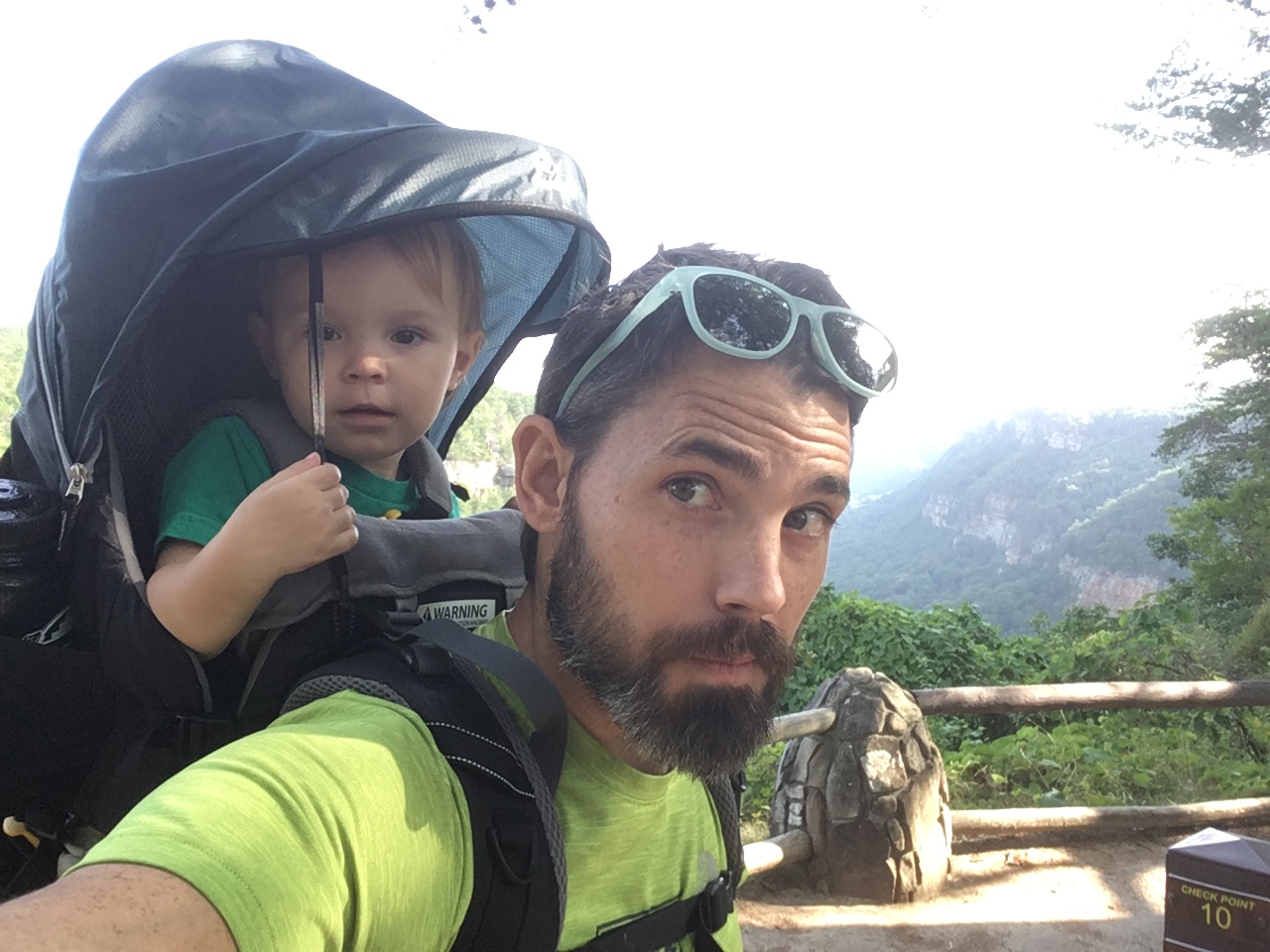
Whether I’m taking my two year old daughter backpacking on Lookout Mountain or heading to the the playground with both of my children, I always check the weather before setting out.
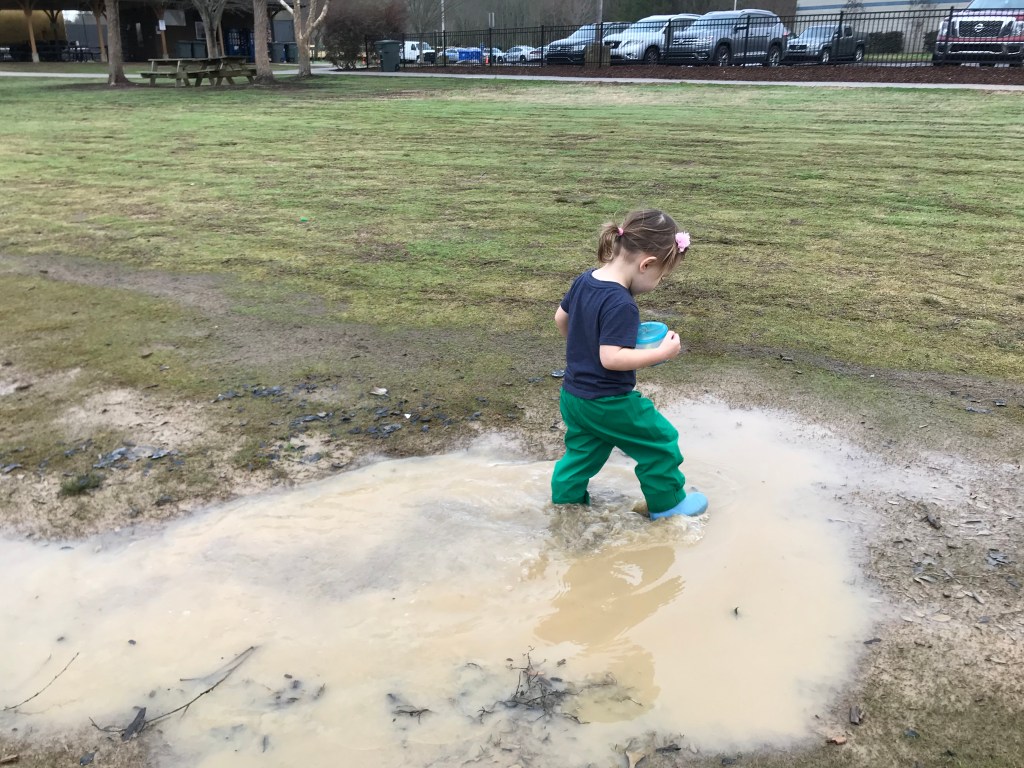
On this day I had both children, so we went to Imagination Station in Collegedale, Tn. for a little fun after the rain settled. Since everything is soggy (it’s the rainy season), I went with Oaki brand rain pants over sweats. My son cannot walk yet, so he wears form fitting leather shoes, but for my toddler I put her in Hunter rain boots. This outfit allows for them to sit on the ground, swings, and slides without getting soggy bottoms.
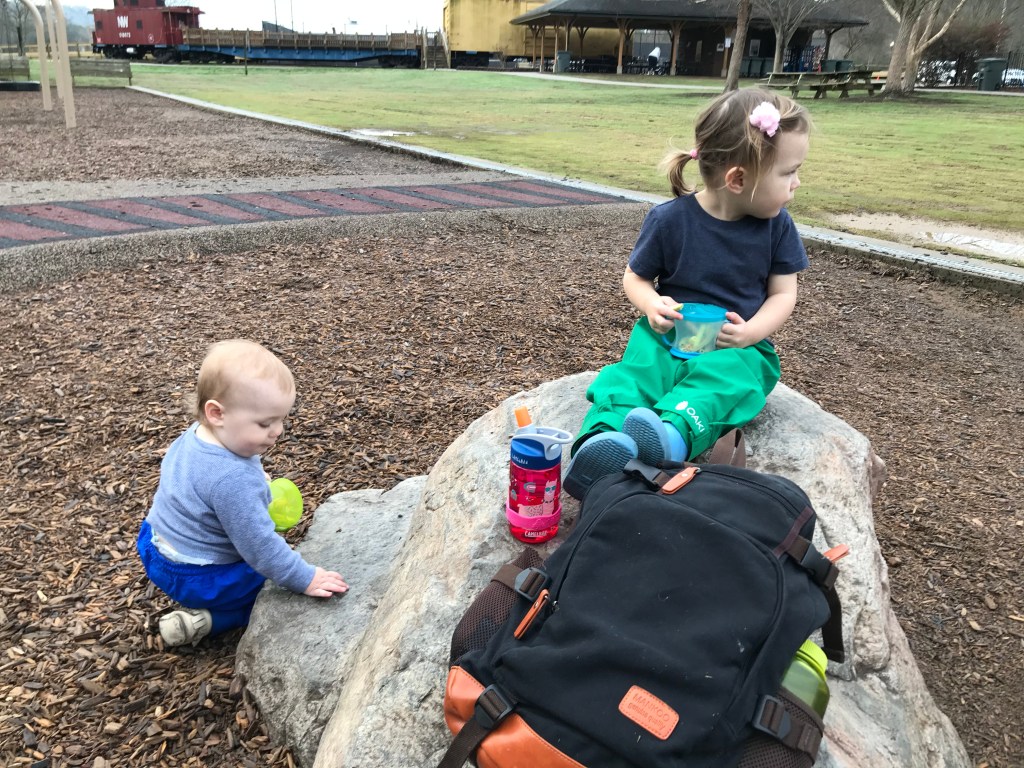
I take along snacks, water, and rain jackets in case the deluge begins again. There’s no need to let inclement weather keep you cooped up inside all day with the amount of cheap outdoor clothes available for children.
In my opinion, I think exposing children early on to all types of weather allows for them to get comfortable in a variety of settings, and it keeps them in tune with nature.
Some people don’t necessarily like playgrounds, but I find the atmosphere conducive for young children of different ages, and the setting is controlled. I don’t always have time to go for long backpacking trips, so the playground is great alternative for a couple hours in the morning or afternoon, usually scheduled around lunch and nap.
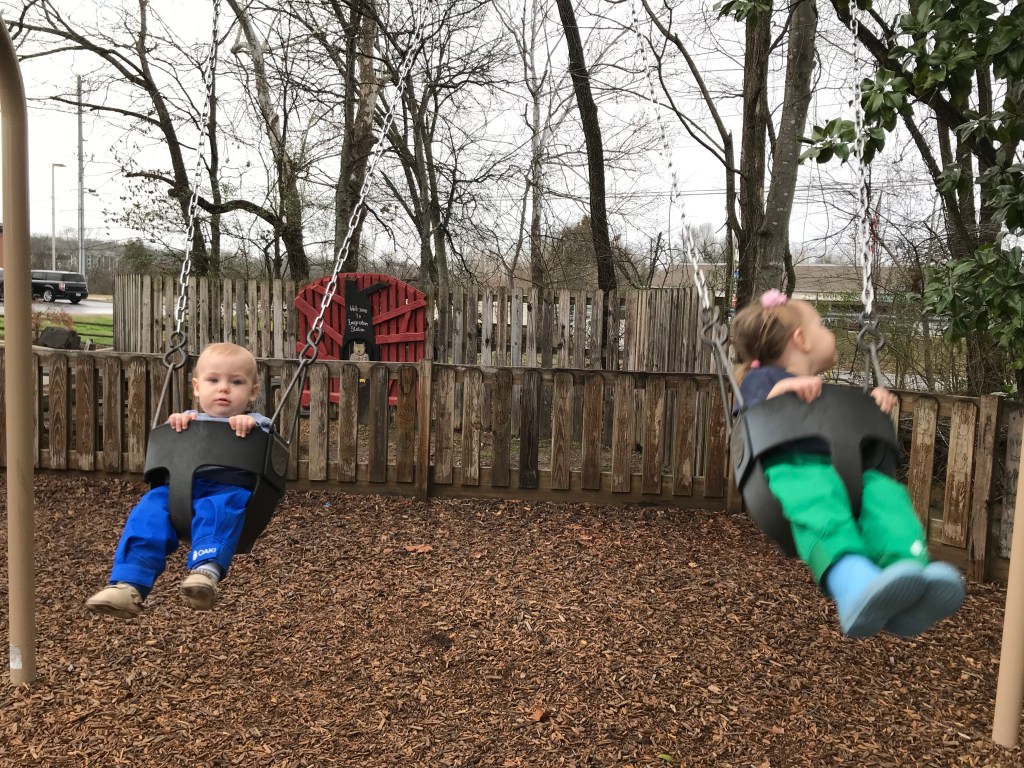
From conversations with other parents, one of the biggest reasons people hesitate to go on an outing with their children, especially when the children are infants and toddlers, is the amount of planning and preparation it takes. My advice is to not overthink it. Instead, just stick to the basics.
It’s that simple! Keep to the basics, but most importantly just go outside with them. Pick an easy location, like a park, to get started, and then work your way into trails after you feel more comfortable.
This is an example post, originally published as part of Blogging University. Enroll in one of our ten programs, and start your blog right.
You’re going to publish a post today. Don’t worry about how your blog looks. Don’t worry if you haven’t given it a name yet, or you’re feeling overwhelmed. Just click the “New Post” button, and tell us why you’re here.
Why do this?
The post can be short or long, a personal intro to your life or a bloggy mission statement, a manifesto for the future or a simple outline of your the types of things you hope to publish.
To help you get started, here are a few questions:
You’re not locked into any of this; one of the wonderful things about blogs is how they constantly evolve as we learn, grow, and interact with one another — but it’s good to know where and why you started, and articulating your goals may just give you a few other post ideas.
Can’t think how to get started? Just write the first thing that pops into your head. Anne Lamott, author of a book on writing we love, says that you need to give yourself permission to write a “crappy first draft”. Anne makes a great point — just start writing, and worry about editing it later.
When you’re ready to publish, give your post three to five tags that describe your blog’s focus — writing, photography, fiction, parenting, food, cars, movies, sports, whatever. These tags will help others who care about your topics find you in the Reader. Make sure one of the tags is “zerotohero,” so other new bloggers can find you, too.

 Outdoor Parenting